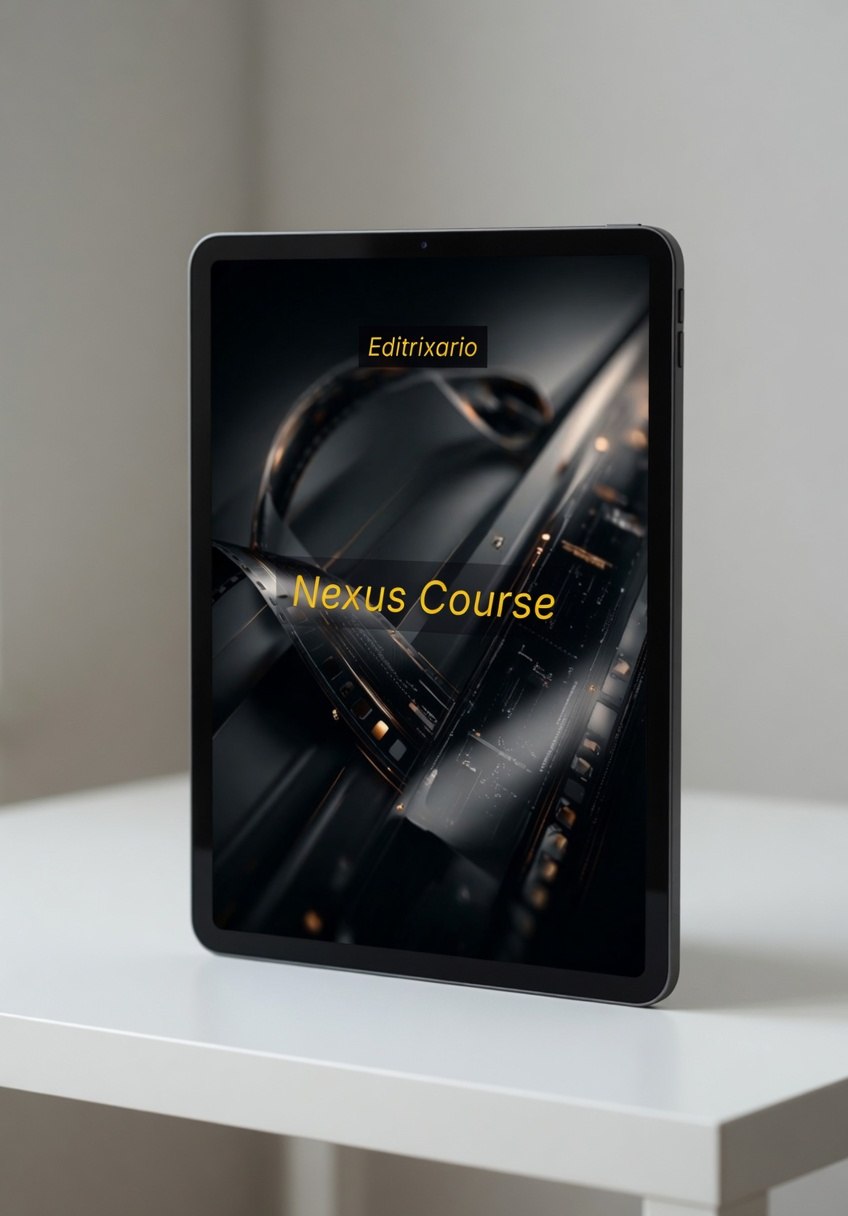
Editrixario
Nexus Course
Nexus Course
Couldn't load pickup availability
Self-paced learning overview
- 🗂️ Digital file available after purchase
- 📚 Long-term availability
- 🔐 Secure checkout
- ✨ Content updated in 2026
1. Problem Statement
Struggling to connect everything you have learned into one complete editing workflow? You are not alone: after studying different topics, you may have knowledge that still needs to be arranged into a clear order. You may understand frame, motion, rhythm, pause, transitions, and structure separately, but when creating longer work, all these elements begin to interact in more complex ways. Learners often find it difficult to decide where to begin, how to review material, which decisions to keep, and which ones to refine. Nexus Course was created to help connect the previous Editrixario topics into one thoughtful learning practice.
2. Solution
This course will teach you how to combine frame analysis, motion structure, visual mood, pacing, pause, scene order, and personal review into one organized process. You will learn to plan a longer learning piece, choose scenes, check transition logic, and review material through specific questions. The course explains how to move from the first idea to the final review without scattered changes. You will study how different Editrixario topics support one another inside a practical task. The materials help form a careful approach to editing, where each decision has its role.
3. What’s Inside
Module 1: Editing Map of the Work
In this module, you will create a map for your future learning piece. You will define the main line, approximate structure, and the role of the beginning, middle, and ending. The module explains how to think ahead about which scenes may be needed, where a pause may appear, where motion matters, and where the frame or light point plays the main role. This map does not restrict creativity; it helps you avoid getting lost while working with material.
Module 2: Choosing Fragments by Role
This section focuses on careful material selection. You will learn to view fragments not only as interesting frames, but as parts of a future structure. One fragment may open a theme, another may explain action, a third may create a pause, and a fourth may lead toward the ending. The module helps identify which scenes support the main line and which only add extra weight. Learners practice choosing material by function rather than by random impression.
Module 3: Combining Frame, Motion, and Rhythm
In this module, you will study how three key elements work together: frame, action, and pacing. You will see that a strong frame can lose meaning if the motion inside it does not support the scene, while fitting motion can feel weaker if pacing is poorly chosen. The module teaches how to analyze these elements together: where a frame should stay longer, where action needs a transition, and where rhythm should shift for clearer perception.
Module 4: Pause, Mood, and Change of Parts
This section helps you work with quieter moments inside a longer piece. You will explore how a pause can prepare a mood change, give space after an active scene, or create a transition into a new part of the story. The module explains why not every stop is unnecessary, but not every silence supports meaning. You will learn to check whether a pause has a function or only slows the work without a clear reason.
Module 5: Checking Scene Transitions
In this module, attention moves to connections between parts. You will analyze how one scene passes attention to the next: through motion, a similar visual motif, space change, reaction, pause, or mood contrast. The module helps you see where a transition feels natural and where the viewer may need more preparation. You will also learn to ask questions about each cut: what changed, why this transition is placed here, and how it supports the overall line.
Module 6: Full Review and Refinement
This section focuses on reviewing assembled work. You will learn not to change everything randomly, but to go through the material in several rounds: first overall structure, then frames, then motion, then rhythm, then pauses and transitions. The module explains how to record refinements without losing earlier decisions. This approach helps you edit more carefully and see which changes are truly needed for coherence.
Module 7: Final Learning Piece
The final module invites you to create a complete learning piece made of several parts. You will plan the structure, choose fragments, assemble scenes, check transitions, analyze pauses, and perform repeated review. The task combines themes from the full Editrixario line: light, frame, motion, rhythm, points of attention, longer structure, and personal analysis. The aim of the module is to help learners build their own learning example that can be reviewed, improved, and used as a reference point for future exercises.
4. Who Is This For?
✅ Suitable if you:
— already know the main Editrixario topics;
— want to combine frame, motion, rhythm, and structure in one process;
— work with longer learning pieces;
— want to review your own scenes more systematically;
— aim to see connections between different editing decisions;
— are ready to plan, review, and refine material in several stages;
— want to complete the course line with a coherent practical piece.
❌ Not for you if:
— you are only beginning and do not yet understand editing basics;
— you do not want to work with longer tasks;
— you are looking only for short tips without deeper analysis;
— you do not plan to review your own work after the first assembly;
— you expect identical results without personal practice and careful repetition.
5. What You’ll Learn
After completing Nexus Course, you will be able to:
— plan a longer learning editing piece;
— create a map for one scene or several scenes;
— choose fragments by their role in the story;
— combine frame, motion, and rhythm inside one task;
— work with pause as part of structure;
— check transitions between scenes;
— analyze mood changes between parts;
— perform a full review using several criteria;
— record refinements without scattered changes;
— see connections between all Editrixario course-line topics;
— create a complete learning piece made of several parts;
— use your final example as a foundation for future exercises.
6. 30-Day Request Period
Nexus Course includes a 30-day period during which you can contact the Editrixario team about return conditions if the material format does not match your expectations.
Are Editrixario courses suitable for beginners?
Are Editrixario courses suitable for beginners?
Yes, the materials are created so learners can gradually understand editing thinking, scene structure, rhythm, frame selection, and visual storytelling logic. Each plan has its own level of depth, so you can start with a basic format and later move to broader collections.
Do I need prior editing experience?
Do I need prior editing experience?
No, prior experience is not required. The courses explain editing through clear examples, practical tasks, and structured materials. If you already have some skills, the materials can help organize your knowledge and encourage a more attentive view of editing.
Share